

Study in Germany
Your Dream Starts Here
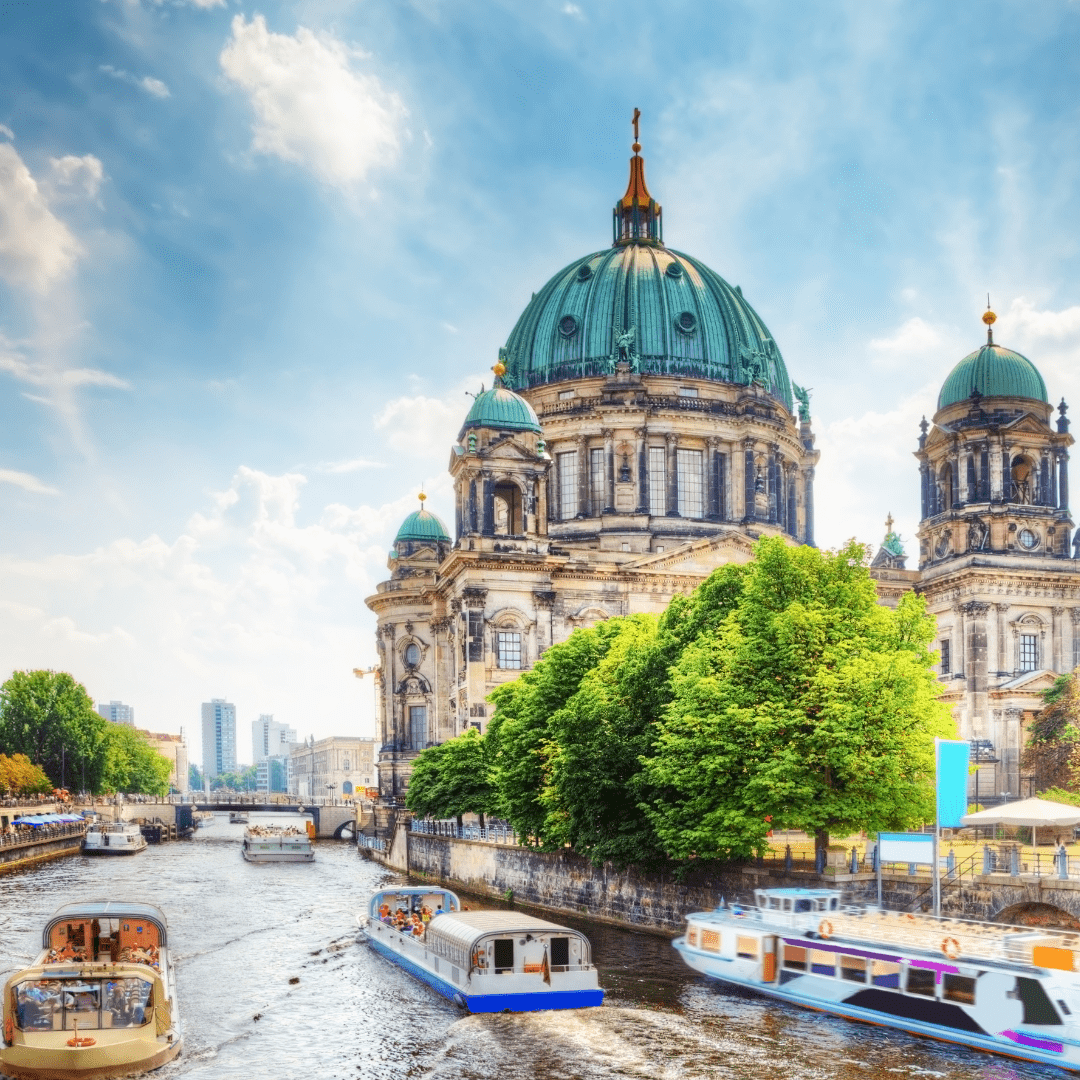



Germany is a highly sought-after destination for students due to its outstanding education system and low or no tuition fees at public universities. Known for its strong emphasis on research and innovation, Germany offers a wide range of high-quality academic programs in various fields. Students also benefit from the country’s rich cultural heritage and vibrant city life. With affordable living costs compared to other Western countries, Germany provides an excellent balance of education and value, making it a popular choice for international students.
Here are some fast facts about Germany:
1. Location: Germany is located in Central Europe and shares borders with nine countries: Denmark, Poland, Czech Republic, Austria, Switzerland, France, Luxembourg, Belgium, and the Netherlands.
2. Capital: Berlin is the capital and largest city of Germany.
3. Language: The official language is German, and it is the most widely spoken native language in Europe.
4. Population: Germany has a population of approximately 84 million people (as of 2023), making it the most populous country in the European Union.
5. Government: Germany is a federal parliamentary republic with a president as the head of state and a chancellor as the head of government.
6. Currency: The euro (€) is the official currency of Germany.
7. History:
– Germany was unified as a nation-state in 1871.
– It was divided into East and West Germany after World War II, and reunified in 1990 after the fall of the Berlin Wall.
8. Economy: Germany has the largest economy in Europe and the fourth largest in the world. It is a global leader in industries such as automotive, engineering, chemicals, and electronics.
9. Famous Landmarks:
– Brandenburg Gate: A symbol of Berlin and Germany.
– Neuschwanstein Castle: A fairy-tale castle in Bavaria.
– Cologne Cathedral: A Gothic masterpiece in Cologne.
– Oktoberfest: The world-famous beer festival held annually in Munich.
10. Education: Germany is known for its high-quality education system, including its universities, many of which offer tuition-free education to both domestic and international students.
11. Culture: Germany has a rich cultural history, being the birthplace of composers like Beethoven and Bach, and philosophers like Kant and Nietzsche. It is also known for its contributions to literature, art, and science.
12. Sports: Soccer is the most popular sport in Germany. The national team is one of the most successful in the world, having won multiple FIFA World Cups. Other popular sports include handball, basketball, and motorsports.
13. Climate: Germany has a temperate seasonal climate with moderate to heavy rainfall throughout the year. Summers are warm, and winters can be cold, particularly in the southern regions.
14. National Day: German Unity Day, celebrated on October 3rd, marks the anniversary of German reunification in 1990.
These facts give a snapshot of Germany’s key characteristics and cultural significance.
The education system in Germany is structured to provide a comprehensive education from early childhood through to higher education. The system is highly decentralized, with responsibilities shared between federal and state (Länder) governments. Here’s an overview of the German education system:
1. Structure of the Education System:
A. Early Childhood Education:
– Ages: Birth to 6 years old.
– Types: Includes childcare centers (Kitas) and kindergartens. The focus is on socialization, basic skills, and play.
B. Primary Education:
– Ages: 6 to 10 years old.
– Grades: 1st to 4th grade (Grundschule).
– Curriculum: Basic subjects include German, mathematics, science, social studies, arts, and physical education. The goal is to provide a broad foundation in basic skills.
C. Secondary Education:
– Ages: 10 to 18 years old, divided into two stages.
– Secondary I (Sekundarstufe I):
– Grades: 5th to 10th grade.
– Types of Schools:
– Gymnasium: Academic-focused, leading to the Abitur (university entrance qualification). Students typically attend Gymnasium from grades 5 to 12 or 13.
– Realschule: Offers a more practical education with a focus on intermediate skills, leading to the Realschulabschluss (intermediate school leaving certificate). Students typically attend Realschule from grades 5 to 10.
– Hauptschule: Provides a more vocational education, leading to the Hauptschulabschluss (basic school leaving certificate). Students typically attend Hauptschule from grades 5 to 9 or 10.
– Gesamtschule: Comprehensive school that combines elements of Gymnasium, Realschule, and Hauptschule, allowing students to choose different educational paths.
– Curriculum: Includes core subjects such as German, mathematics, sciences, and social studies, with additional subjects depending on the type of school.
– Secondary II (Sekundarstufe II):
– Grades: 11th to 12th/13th grade (depending on the state and type of school).
– Types of Schools:
– Gymnasium: Continues education leading to the Abitur.
– Vocational Schools: Offers dual education systems combining classroom instruction with practical training. Includes Berufsschule (vocational school) for apprentices.
– Curriculum: In Gymnasium, students prepare for the Abitur exams, which are required for university entry. In vocational schools, students receive specialized training and education for specific trades.
D. Higher Education:
– Types: Includes universities (Universitäten), applied sciences universities (Fachhochschulen), and other higher education institutions.
– Degrees:
– Bachelor’s Degree: Typically 3 to 4 years.
– Master’s Degree: Typically 1 to 2 years.
– Doctoral Degree (PhD): Varies, typically 3 to 5 years.
– Admission: Universities generally require the Abitur or an equivalent qualification for admission.
E. Vocational Education and Training (VET):
– Dual System: Combines apprenticeships (on-the-job training) with vocational school instruction. The system is widely recognized and offers training in various trades and professions.
– Duration: Typically 2 to 3.5 years.
F. Adult Education:
– Includes continuing education, professional development courses, and lifelong learning opportunities provided by various institutions and organizations.
2. Key Features:
A. Decentralized System:
– Education policies and regulations are primarily managed by the individual states (Länder), leading to some variations in educational practices and curricula across Germany.
B. Tracking System:
– After primary education, students are placed into different types of secondary schools based on academic performance, teacher recommendations, and parental choice. This tracking system can influence future educational and career opportunities.
C. Free Education:
– Public education is free of charge, including higher education at public universities, though students may need to pay for certain fees and costs (e.g., administrative fees, textbooks).
D. Abitur:
– The Abitur is the qualification needed for university entrance and is taken at the end of Gymnasium. It is a comprehensive exam that covers a range of subjects and includes written and oral components.
E. Vocational Training:
– The dual system of vocational training is highly regarded and integrates practical experience with theoretical education, making it a key feature of Germany’s approach to workforce development.
3. Educational Attainment:
A. Primary and Secondary Education:
– Most students complete primary and secondary education, with the majority continuing to upper secondary education or vocational training.
B. Higher Education:
– Germany has a high rate of participation in higher education, with many students pursuing undergraduate and postgraduate degrees.
The German education system is designed to offer a broad and rigorous education, with a strong emphasis on vocational training and academic preparation, providing various pathways for students to achieve their educational and career goals.
- Passport
- Financial proof
- German language proficiency certificate
- Health Insurance
- Motivational letter
- CV
- Language proficiency
- Recent biometric photos
- Acceptance letter from German university
- All academic certificates
- Birth certificate
- VFS checklist
- Application form
- Citizenship certificate
- Declaration
- Evidence of previous qualifications
- Statement of Purpose
- Academic qualifications
- Academic title
- Acceptance letter
- Application fee Payment
- APS certificate
- Proof of accommodation
- Proof of admission
Collage and Universities


