Study in UK
Your Dream Starts Here



The UK is a top destination for students seeking world-class education and a rich cultural experience. Known for its prestigious universities and diverse academic programs, the UK offers a broad range of study opportunities. While tuition fees can be higher than in some other countries, the quality of education, historic institutions, and vibrant student life make it a compelling choice. Students benefit from a global network and numerous research opportunities, alongside the chance to immerse themselves in the UK’s rich history and dynamic culture.
1. Location: The United Kingdom is located off the northwestern coast of mainland Europe, consisting of the island of Great Britain (which includes England, Scotland, and Wales) and the northeastern part of the island of Ireland (Northern Ireland).
2. Capital: London is the capital and largest city of the United Kingdom.
3. Language: The official language is English, but Welsh, Scots Gaelic, and Irish are also spoken in some regions.
4. Population: The UK has a population of approximately 67 million people (as of 2023).
5. Government: The UK is a constitutional monarchy with a parliamentary democracy. The monarch (currently King Charles III) is the head of state, and the Prime Minister is the head of government.
6. Currency: The official currency is the British Pound Sterling (£).
7. History:
– The UK was formed in 1707 with the union of England and Scotland, and later included Ireland in 1801.
– In 1922, most of Ireland gained independence, leading to the formation of Northern Ireland as part of the UK.
8. Economy: The UK has one of the largest economies in the world, with major industries including finance, manufacturing, healthcare, and technology. London is one of the world’s leading financial centers.
9. Famous Landmarks:
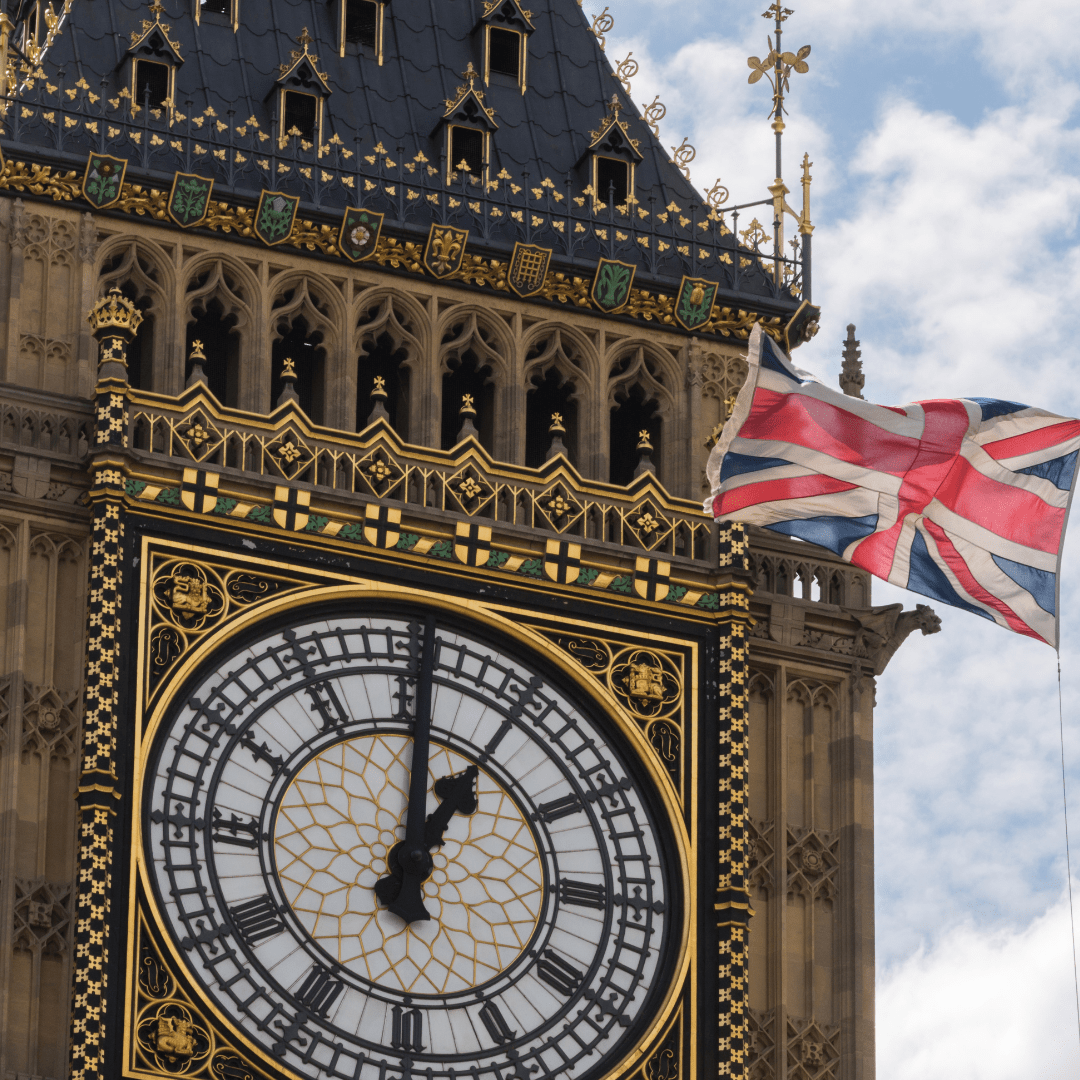
– Big Ben and the Houses of Parliament: Iconic symbols of London and British politics.
– Buckingham Palace: The official residence of the British monarch.
– Stonehenge: Prehistoric monument in Wiltshire, England.
– Edinburgh Castle: Historic fortress in Scotland’s capital.
10. Education: The UK is home to some of the world’s most prestigious universities, including Oxford, Cambridge, and the London School of Economics.
11. Culture: The UK has a rich cultural heritage, influencing music, literature, art, and theatre globally. It is known for producing renowned writers like William Shakespeare, Charles Dickens, and J.K. Rowling, as well as musical legends like The Beatles and The Rolling Stones.
12. Sports: Football (soccer) is the most popular sport in the UK, with the Premier League being one of the most-watched leagues worldwide. Other popular sports include rugby, cricket, and tennis.
13. Climate: The UK has a temperate maritime climate, characterized by mild temperatures, frequent rainfall, and variable weather. Winters are generally cool, and summers are mild.
14. National Days:
– St. George’s Day (April 23) for England.
– St. Andrew’s Day (November 30) for Scotland.
– St. David’s Day (March 1) for Wales.
– St. Patrick’s Day (March 17) for Northern Ireland.
These facts provide a concise overview of the UK’s key attributes and cultural significance.
The education system in the United Kingdom is structured and divided into several key stages, each designed to cater to different age groups and educational needs. Here’s a comprehensive overview:
1. Structure of the Education System:
A. Early Years Education:
– Ages: Birth to age 5.
– Types: Includes nursery schools, playgroups, and reception classes. Early Years Foundation Stage (EYFS) is the framework that guides education and care for children in this age range.
B. Primary Education:
– Ages: 5 to 11 years old.
– Stages:
– Key Stage 1 (KS1): Years 1 and 2 (ages 5-7).
– Key Stage 2 (KS2): Years 3 to 6 (ages 7-11).
– Curriculum: Includes core subjects such as English, mathematics, and science, along with foundation subjects like history, geography, art, and physical education.
C. Secondary Education:
– Ages: 11 to 16 years old.
– Stages:
– Key Stage 3 (KS3): Years 7 to 9 (ages 11-14).
– Key Stage 4 (KS4): Years 10 and 11 (ages 14-16).
– Curriculum: Students follow a broad curriculum including core subjects (English, mathematics, science) and a range of optional subjects. At the end of KS4, students take General Certificate of Secondary Education (GCSE) exams or equivalent qualifications.
D. Post-16 Education:
– Ages: 16 to 18 years old.
– Options:
– Sixth Form: Part of secondary schools or separate colleges where students pursue A-levels or vocational qualifications such as BTECs.
– Further Education Colleges: Offer a range of academic and vocational courses, including apprenticeships and specialized training.
E. Higher Education:
- – Types: Includes universities and higher education colleges.
- – Degrees:
- – Undergraduate Degrees: Typically 3 to 4 years (e.g., Bachelor’s degrees such as BA, BSc).
- – Postgraduate Degrees: Includes Master’s degrees (usually 1 year) and Doctoral degrees (PhD, usually 3-4 years).
2. Key Features:
A. National Curriculum:
– A framework that sets out the subjects and content to be taught in schools. It applies to most schools in England (not Scotland, Wales, or Northern Ireland, which have their own systems).
B. Types of Schools:
– State Schools: Funded by the government and free to attend. Includes academies, maintained schools, and free schools.
– Independent Schools: Private schools funded through tuition fees and private sources. They are not bound by the national curriculum.
C. Standardized Testing:
– Key Stage 1 and 2: National Curriculum Tests (SATs) are taken at the end of Key Stages 1 and 2.
– GCSEs: Taken at the end of Key Stage 4.
– A-levels: Taken at the end of Key Stage 5.
D. Grading System:
– GCSEs: Graded from 9 (highest) to 1 (lowest), with U indicating ungraded.
– A-levels: Graded A* to E, with U indicating ungraded.
E. Further and Higher Education:
– Further Education (FE): Includes post-16 education and training.
– Higher Education (HE): Includes undergraduate and postgraduate study at universities.
F. Scotland, Wales, and Northern Ireland:
– Scotland: Has a different system with the Scottish Qualifications Authority (SQA) and the Scottish Credit and Qualifications Framework (SCQF).
– Wales: Follows a slightly different curriculum and examination system, with qualifications such as the Welsh Baccalaureate.
– Northern Ireland: Has its own curriculum and examination system, including the GCSE and A-levels administered by the Council for the Curriculum, Examinations & Assessment (CCEA).
3. Educational Attainment:
A. Primary School:
– National tests assess performance at the end of Key Stages 1 and 2.
B. Secondary School:
– GCSE results are used to determine further education and employment opportunities.
C. Higher Education:
– University degrees are highly regarded and are a key factor in career progression.
The UK education system is designed to provide a broad and balanced education, with a strong emphasis on preparing students for further education and the workforce.
Documents Required for Offer Request:
- All academic transcripts and certificates
- Passport
- Passport
- IELTS/TOEFL score
- 2 recommendation letters from teachers
- Work experience letter to fulfill gaps if any
- Statement of Purpose
- CV
After receiving Offer
- Make No objection certificate from MOE
- Manage fund (1-year tuition fees + 9 months Living Cost) and hold it in the bank account for a minimum 28 days.If you are studying in Greater London*, you must have at least £1,265 per month of your course. If you are studying outside of London, you will have to show £1,015 per month of your course. Each dependant will be required to demonstrate maintenance of £6120 (£680 per month up to a maximum of 9 months)
- Pay tuition fees (1 year in case of Inside London OR Initial deposit of Universities of Outside London)
- Get a TB certificate from IOM.
- Prepare additional financial documents like Relationship certificates with sponsor, Income and property valuation.
Apply for CAS
- Fess payment confirmation
- TB certificate.
- Financial documents
Prepare for Mock Interview from University
Receive CAS
Fill the online application form of UKVI
An applicant filling student visa forms for UK should make sure that he/she is able to pay for the course and the living expenses of family members if they come along. While applying for a student visa for UK one should make sure that these financial resources are provided for without working in UK or claiming public funds.
The applicant should clearly state the intent of not working in the UK unless he/she is accepted for a course lasting longer than six months. Then one may work part-time or during vacations.
Also during the student visa interview make it sure to the interviewer of one’s intent to leave the UK at the end of one’s studies.
Processing of visa application
Make an application for a student visa in UK two to three months before you intend to travel. The periods from September to January is especially busy for the visa office and so make sure you apply well in advance.
While applying for a student visa the fees should be paid only by a bank draft (available at the Visa Application Centers). They should be made in favor of:
● VFS
An additional handling charge per application will be levied by VFS. Also as you go for the student visa interview be ready with the documents. The Entry Clearance Officer will try to make a decision using your student visa form and the supporting documents you have provided. If this is not possible, they will conduct a student visa interview. The schedule of the student visa interview will be given to you.
Mandatory documents:
- Income tax papers of the sponsor.
- Student Visa Application form.
- CAS Letter from an accepted institution.
- Valid passport.
- Visa fee in the form of a bank draft.
- Copies of academic mark sheets and certificates.
- Work experience certificates, if applicable.
- Proof of payment of fees, if applicable.
- Proof of funds – Applicants must demonstrate that they have sufficient liquid assets to pay the tuition fees, living expenses and traveling cost without engaging in employment in UK. Even bank loans are accepted by few Universities.
- Letter from the sponsor.
Collage and Universities